|
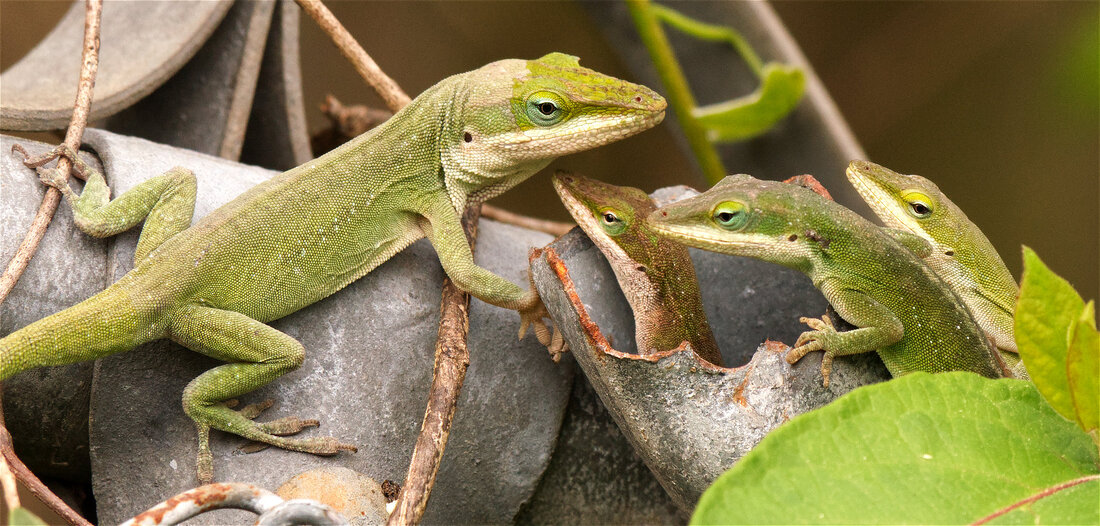
Dr. Bette Kauffman's innovative use of iNaturalist.org for our Rendezvous 2021 Scavenger Hunt simultaneously shows that a) the iNaturalist platform is very well-suited to such purpose, b) that the Louisiana Master Naturalist Association is operating at the cutting edge of applied information technology, and c) that the southern areas contributed the most observations! Well done, Bette; and well done everybody who participated in what turned out to a be a dynamic and fun project that also has considerable Citizen Science value. The target list was compiled by a committee consisting of Kauffman, Kimmie and Charles Paxton. As such these people couldn't take part because they had prior knowledge of the target flora and fauna, all were attainable except for the Chanterelle fungi (Genus Cantharellus) and the Rough Green Snake (Opheodrys aestivus). This year has been cool and it seems they are not out yet, at least where we have been looking. The list included several invasive species. In her closing speech, Dr. Kauffman gave a good overview of the activity, declared the Southern chapters to have carried the day, and thanked all the participants: the 31 observers and 160 Identifiers. She noted that there were 120 species identified out of a total of 641 observations with Anolis carolinensis, the most observed species with 25 recorded! It was a hard-fought contest with a close finish! Karen Pinsonat of Greater Baton Rouge chapter attained a fabulous first place by observing and recording 29 of the 35 target items on the list, with 26 of them confirmed to 'Research Grade' status. This was especially good considering that she didn't play the Anhinga 'wild card'. Tres Fisher of GNLO, came in a very close second with 27 target items including the wild card. He actually recorded the single greatest number of observations of any type, a formidable count of 73! This man's going to count in the Nature Cities Challenge! I'm sure that they all will! Kristen Melton, also of GNLO, came a very close third with 26 items including the wild card and 20 of them were research grade. Honorable mentions were made of Amber King of GBR with 25 observations, 21 being research grade! Also of Barbara Morris who also made a high 25, with 20 of them being research grade! Dr. Kauffman praised them highly and praised and thanked all of us who took part. View the wrap-up video of the LMNA Scavenger Hunt here. She has provided the powerpoint below as a pdf
0 Comments
A gallery of the LMNA contest images with vertical orientation. A gallery of the LMNA contest images with horizontal orientation. © 2021 All images shown here have joint copyright, the original authors retain all rights and LMNA has licensed use.
Dr. Kauffman, who also serves as President of the Northeast chapter, announced the final results of the LMNA Scavenger Hunt (View LMNA Scavenger Hunt on iNaturalist.org). This was possibly the first time ever that the iNaturalist Citizen Science platform has been used for a scavenger hunt and it proved highly suitable! It was a pretty good list overall with a very useful addition of a wild-card Anhinga, but the Chanterelles aren't out yet. The vast majority of the contributions were from the South with some from the Northwest. The overall winner was Karen Pinsonat from GBR with 29 observations from the target list, 22 of them were confirmed research grade before the deadline, so that was fantastic! Secondly, LMNA Communications Officer, Charles Paxton wrapped up the annual photo and video contests and announced the winners, showing off the fine photographs that won by popular vote. This year there were 34 entries altogether, 21 amateur and 12 professional, in five categories: 8 each in Artistic and Wildlife, 9 in Nature in close-up, 7 in Habitat, and 2 in Naturalist. Together with the exemplars this makes a total of 39 images that our chapters will be able to use to help promote our group and its activities, so thank you all who have contributed images and also by voting. The images will appear here in a gallery and will be accessible from an LMNA image archive. There were also three video entries in two categories, 2 in Critters in action and 1 in Habitat. These excellent entries were the first ever for us because this is the first year for an LMNA video contest. The high interest in the Artistic category suggest that there is definitely scope for an Original Art contest too! On behalf of the LMNA, Dr. Kauffman then congratulated the 2021 Caroline Dormon Outstanding Louisiana Master Naturalist of the Year, Bill Fontenot. Described by Dr. Thomas as "an all-round excellent Human being", Bill features in the above-linked video wearing his prize LMNA shirt. Dr. Thomas delivered his shirt and engraved trophy a few days before the award ceremony. In his forthright and moving award acceptance speech, Fontenot describes key points in his life and career along with his connection to Caroline Dormon, answers questions from the audience and comes across as a modest and down-to-Earth, but highly impactful Restoration Ecologist with a long and illustrious career as Conservation Biologist and environmental educator/mentor, determined to do his individual best to confront the very depressing state of eco-crisis that confronted him as a journalist. His wife encouraged him to channel his concern and anger at the loss of biodiversity into conservation action. This he has done very effectively, impacting thousands of lives for well over twenty years! Amongst other interesting statements he praises young environmental activist Greta Thurnberg for the courage of confronting truth to power, echoing his sentiment, she said in an interview recently that the best remedy for anger and despair is individual action. So true! It is individuals like Bill, that influence positive changes that benefit us all. Thank you, Bill. The LMNA is grateful for his interesting and inspiring speech and long years of great service. If you need to hire a consultant restoration ecologist, look up the Nature Dude on Facebook! Information about the Louisiana Certified Habitat program, his book and many valuable native plants are available at reasonable prices via the Acadiana Native Plant Project website https://greauxnative.org/ Thank you all. As a group we overcame many of the limitations imposed by this pandemic by using information technology to get together online. I thought the socials were especially fun and must praise Janie Braud for her good efforts in that regard! Bill Fontenot photos are provided courtesy of Janeene deClouet. April 20th, 2021; Monroe, La. – The Caroline Dormon Outstanding Louisiana Naturalist Award 2021 will be presented to William R. “Bill” Fontenot at a Zoom assembly April 25th, 2021, at 2 p.m. The statewide Award is made annually by the Louisiana Master Naturalist Association. Fontenot was nominated for the award by the Acadiana Chapter of LMNA. In 1986 Fontenot began his career with Lafayette Parish Consolidated Government, working first as Curator of Natural Sciences at the Lafayette Natural History Museum, then as manager of the Acadiana Park Nature Station. He has dedicated his career in biology to restoring ecological integrity to land, from the smallest urban gardens to the largest wildlife management areas. As a local columnist, for over two decades he helped educate the public about our natural heritage. Since 1987 Fontenot has operated his own wildlife management, “wildscape” design, and ecological restoration consulting business, specializing in ecological assessment, biological inventory, land-use planning, and wildlife-friendly native plant-oriented landscape planning. His consulting work has taken him to hundreds of sites throughout the midwestern and eastern U.S., serving wildlife management and conservation agencies, landscape designers, community planners, ecotourism interests, and private landowners. Fontenot earned an M.S. in freshwater fish ecology from the University of Louisiana at Monroe in 1980, then in the early 80s spent time in the PhD program in biogeography at the University of Alabama. The Louisiana Master Naturalist Association founded the Outstanding Louisiana Naturalist Award as a tribute to the legacy of Caroline Dormon and to recognize people who personify her commitment to conserving and appreciating the rich biodiversity of Louisiana. Fontenot is the fourth recipient of the award. The award will be presented by Bob Thomas, president of the Louisiana Master Naturalist Association. A link to the zoom assembly will be distributed to media a few days before the event. See our Dormon Award dedicated webpage with profiles on current and past winners. 2020 — Kelby Ouchley, 2019 — Vernon Antoine Brou, Jr., 2018 — Dr. Charles Allen. https://www.louisianamasternaturalist.org/the-dormon-award.html Last night (Feb. 15th, 2021) as snow lay on the ground from Lake Charles northwards, the LMNA were pleased to host the LaNERR Roadshow on Zoom. An illustrated talk introducing the Louisiana Master Naturalist organization to the process of identifying a National Estuarine Research Reserve in Louisiana (LaNERR). Check out the video recording on LMNA Channel The introduction was made by Dr. Bob Thomas, Professor of Environmental Communication at Loyola University, New Orleans and founder of LMNA. The LaNERR Designation Leadership Team, Dr. Robert Twilley, of LA SeaGrant and Kristin Ransom of NOAA, kindly explained
The National Estuarine Research Reserve (NERR) System was established through the Coastal Zone Management Act and represents a network of 29 coastal sites covering over 1.3 million acres of estuaries across the nation. Louisiana is the last state with an oceanic coast to designate such a protected area and yet has a coastline that is exemplary in having rich estuarine ecosystems. A new estuarine research reserve in Louisiana would represent a partnership program with NOAA focused on promoting stewardship, research, training, and education at a particular site in our coastal zone. For more information see https://www.laseagrant.org/deltanerr/ Request a Roadshow https://lsu.qualtrics.com/jfe/form/SV... THE DR. CHARLES ALLEN NATURE PRESERVE Note the new date! March 6th, 9:45 – Noonish: Trillium Walk & GBBC Join Dr. Bette Kauffman and colleagues in an exploration of the 80 acre Dr. Charles Allen Nature Preserve located in the biodiverse Ouachita Hills Region on the banks of the Ouachita River near Columbia, Louisiana. Formerly The University of Monroe Louisiana's (ULM) Biology Research Station, the area was Donated to ULM in the year 2000 by Dr. Harry Winters in honor of his accomplished Botanist colleague, formerly ULM professor, Dr. Charles Allen, the protected area is now administered by the town of Columbia. Among the wild treasures of this CENLA site are native Trillium and Red Buckeye plants set among riparian forest situated in dramatic ridge and valley topography! Come along, we'll have a blast! Click here for more info. Transmission Risks: How Wearing Masks & Distancing Counts in The Fight Against Corona VirusNB: Now two masks are recommended and are thought to be 90% effective! Distance and ventilation is key to reducing risk! I think we probably all have some family members and friends who worry us by not heeding the Governor's instructions about wearing masks and keeping, not mixing with other households and staying at least six feet clear of each other. A Decade After Deepwater Horizon How is Gulf Wildlife Faring? BP’s Penalties Funding Largest Ecosystem Restoration Effort in U.S. History.Poster child for deadly oil spills, The Deepwater Horizon disaster still resonates today. Eleven people lost their lives, and an estimated 200,000,000 gallons of crude oil were leaked into the Gulf of Mexico over an agonizing period of 87 days. The shores of the Gulf of Mexico have suffered hurricanes, systemic erosion and submersion of marshes from canals, deforestation of the protective chenieres, invasive Nutria rats and pollution. America’s lost 2000 square miles of Gulf coastal land over the past 90 years. Could this next decade herald better times for the Gulf coast, it’s wildlife and the people who depend upon a healthier environment? A new report by The National Wildlife Federation summarizes the latest information available about ten wildlife species that were affected by the “ecosystem-level injury to the northern Gulf of Mexico,” as well as the restoration efforts underway — what constitutes the largest ecosystem restoration effort in U.S. History! The Spice of Life: The Lowly Roly-Poly
Can you spare $8 trillion? How Investments In Tropical Forest Protection and Curbing Wildlife Trade Can Pay-off In Zoonotic Disease PreventionHIV, H5N1, Nipah, Ebola, Marburg, SARS, MERS and COVID-19 are all zoonotic diseases transmitted from wildlife to people, most have proved expensive in economic and personal terms, and while the filoviruses may be an ancient evil and the Coronavirus 19 a very new one, they all share the underlying cause of unusual proximity between people and wildlife. Habitat destruction and human incursion are common factors. If you've been wondering whether environmental conservation makes economic sense, here is an interesting article from Science Magazine's Policy Forum that shows not only that it does, but how it does, and that we may simply no longer be able to discount the value of environmental destruction in the big balance sheet of modern human civilization. The mathematics at a glance: US $17.7-26.9 billion can be invested to prevent tropical deforestation and limit wildlife trade, to yield savings of US $8.1-15.8 trillion worth of damage. Maps From Space! The Dataset: Global map of the Biodiversity Intactness Index, from Newbold et al. (2016) Science. Download from UK Natural History Museum Data Portal. UK Natural History Museum Data Portal Data usage licence: CC BY 4.0 Want to make a spatial map of the world or your own favorite bits? We can now, thanks to the UN's online Biodiversity Lab and the technical wizards at NASA. I made the map on the left that shows The Biodiversity Intactness Index (2016) which is the modeled average abundance of originally present species in a grid cell, as a percentage, relative to their abundance in an intact ecosystem. Pretty cool, huh? There are up to 115 global data layers for research use in both terrestrial and marine mapping. Find out more about this amazing Global Information System and the free course that trains us in its use. June 6, 2020; Monroe, La. – The Caroline Dormon Outstanding Louisiana Naturalist Award 2020 will be presented to Kelby Ouchley at a Zoom assembly June 14, 2020, at 3 p.m. The statewide Award is made annually by the Louisiana Master Naturalist Association. Ouchley was nominated for the award by the Northeast Chapter of LMNA. Ouchley is well known throughout the region for his career raising awareness about the natural history of Louisiana and promoting conservation. He was the force behind getting Black Bayou Lake designated a National Wildlife Refuge. He is the author of six books and his weekly radio broadcast, Bayou Diversity, is ongoing. The Louisiana Master Naturalist Association founded the Outstanding Louisiana Naturalist Award as a tribute to the legacy of Caroline Dormon and to recognize people who personify her commitment to conserving and appreciating the rich biodiversity of Louisiana. Ouchley is the third recipient of the award. Previous recipients are Dr. Charles Allen, Pitkin, La., 2018 and Vernon Antoine Brou, Jr., Abita Springs, Louisiana, 2019. The award will be presented by Bob Thomas, president of the Louisiana Master Naturalist Association, and Bette J. Kauffman, president of the Northeast Chapter of LMNA, at a Zoom assembly. Please pre-register for the event using the link below: You are invited to a Zoom meeting. When: Jun 14, 2020 03:00 PM Central Time (US and Canada) Register in advance for this meeting at: https://us02web.zoom.us/meeting/register/tZMvdeCvrD8pG9f9mN1xntoOCNH1FcgMVHcB After registering, you will receive a confirmation email containing information about joining the meeting. Contact: Bette J. Kauffman, 318-372-8117, [email protected]
TED-Ed, UNEP, and 30 other collaborators launch a free educational platform for environmental adventures available to teachers, parents, students, and curious global citizens Nairobi, 22 April 2020 - In response to the COVID-19 crisis, an unprecedented coalition has come together to launch “Earth School,” which provides free, high-quality educational content to help students, parents and teachers around the world who are currently at home. Initiated by the United Nations Environment Programme (UNEP) and TED-Ed, Earth School takes students on a 30-day “Adventure” through the natural world. The curated Earth School content features videos, reading materials and activities — which will be translated into 10 languages — to help students gain an understanding of the environment while considering their role within it. This is the biggest online learning initiative in UNEP’s history and is available for free on TED-Ed’s website. According to the UN Educational, Scientific and Cultural Organization (UNESCO), more than 1.5 billion learners are affected by COVID-19 school closures. The pandemic has caused a health, economic, and education crisis; in the age of physical and social constraints, there is a strong need for global science literacy. That is why UNEP and TED-Ed — in coordination with 30 collaborators, including National Geographic, WWF and UNESCO — came together to launch Earth School in just over two weeks. Built for children and youth ages 5-18, it spans 30 school days that run between Earth Day and World Environment Day on June 5, which this year will take place under the banner of Time for Nature. TED-Ed creates free, video-based lessons on everything from animals and climate change to underwater farms. It is the educational arm of TED, whose library of thousands of interactive lessons — built by a network of 500,000 educators from across the world — spans all ages and subjects. Each Adventure has been carefully selected by a panel of expert practitioners and caters to different age groups. Each consists of a hands-on experiment and nature discovery. In addition to TED-Ed’s own content, Earth School will feature videos from notable media organizations including National Geographic, PBS LearningMedia and the BBC with the goal of empowering participating students to be caretakers of our planet. “Billions of children are currently out of school because of COVID-19. But learning cannot stop. COVID-19 has revealed how deeply interconnected all life on this planet is," said UNEP’s Executive Director, Inger Andersen. "I am delighted that UNEP, along with TED-Ed and other collaborators, are launching Earth School. Learning about the natural world will be critical to building a better and sustainable future for all." “These unprecedented times highlight just how important it is for young people to connect with the natural world and understand science,” said Vicki Phillips, executive vice president and chief education officer at the National Geographic Society. “We’re thrilled to join forces with trusted organizations like UNEP and TED-Ed to cultivate a spirit of exploration and build empathy for the Earth, no matter where students are the world — even if it's from inside their homes, from a window, or on a short walk in the neighborhood.” “Despite being confined to their homes, this project shows that students, parents and teachers throughout the world can still engage in science-based learning and adventures together. Earth School is a collaboration between so many talented educators and incredible partners from around the world, which is why we’re proud and thrilled to see the initiative feeding the global curiosity of home-bound students, all of whom are the future environmental stewards of our planet. This platform is a gateway to some of the most inspiring lessons on nature and the environment, and each lesson comes with practical and fun activities that students can engage with and share,” said Logan Smalley, founding director of TED’s youth and education initiative, TED-Ed. The lessons were curated by a team of environmental education experts including Kathleen Usher Ph.D, Jessie Oliver and Juliane Voss, who worked with over 100 contributors in creating Earth School. The initiative is in support of SDG 4.7 and the Decade of Delivery and will contribute towards the Global Education Coalition launched by UNESCO last month to convene governments, technology partners and leaders in the education field to keep pupils learning. As part of this coalition, UNEP will be exploring how this content can be adapted and shared with children who aren’t able to access the Internet. Collaborators who have agreed to support this initiative include: BBC Ideas, Basel, Rotterdam and Stockholm Conventions, Bill Nye the Science Guy, Conservation International, CEE, Earth Day Network, Earth Challenge 2020, Environment Online (ENO), GeSI, International Olympic Committee, IUCN, Institute for Planetary Security, Junior Achievement, Learning in Nature, Littlescribe, Minecraft, National Geographic Society, Ocean Wise, Only One, Royal Geographic Society, SciStarter, Sitra, TAT, TED-Ed, The Nature Conservancy, UN Convention on Biodiversity, UN SDSN / TRENDS, UN Technology Innovation Lab, UNCCD, UNDP, UNEP, UNESCO, UNFCCC, UN Food and Agriculture Organization, University of Pennsylvania, Vult Labs, World Association of Girl Guides and Girl Scouts (WAGGGS), World Organization of the Scout Movement (WOSM), Wild Immersion and WWF. Notes for Teachers About the UN Environment Programme UNEP is the leading global voice on the environment. It provides leadership and encourages partnership in caring for the environment by inspiring, informing and enabling nations and peoples to improve their quality of life without compromising that of future generations. About TED-Ed TED-Ed is TED’s youth and education initiative. TED-Ed’s mission is to spark and celebrate the ideas of teachers and students around the world. Everything we do supports learning — from producing a growing library of original animated videos , to providing an international platform for teachers to create their own interactive lessons, to helping curious students around the globe bring TED to their schools and gain presentation literacy skills, to celebrating innovative leadership within TED-Ed’s global network of over 500,000 teachers. TED-Ed has grown from an idea worth spreading into an award-winning education platform that serves millions of teachers and students around the world every week. |
LMNA News BlogWelcome to the Louisiana Master Naturalist Association News Blog. Archives
February 2026
Categories |
||||||||||||||
RSS Feed